
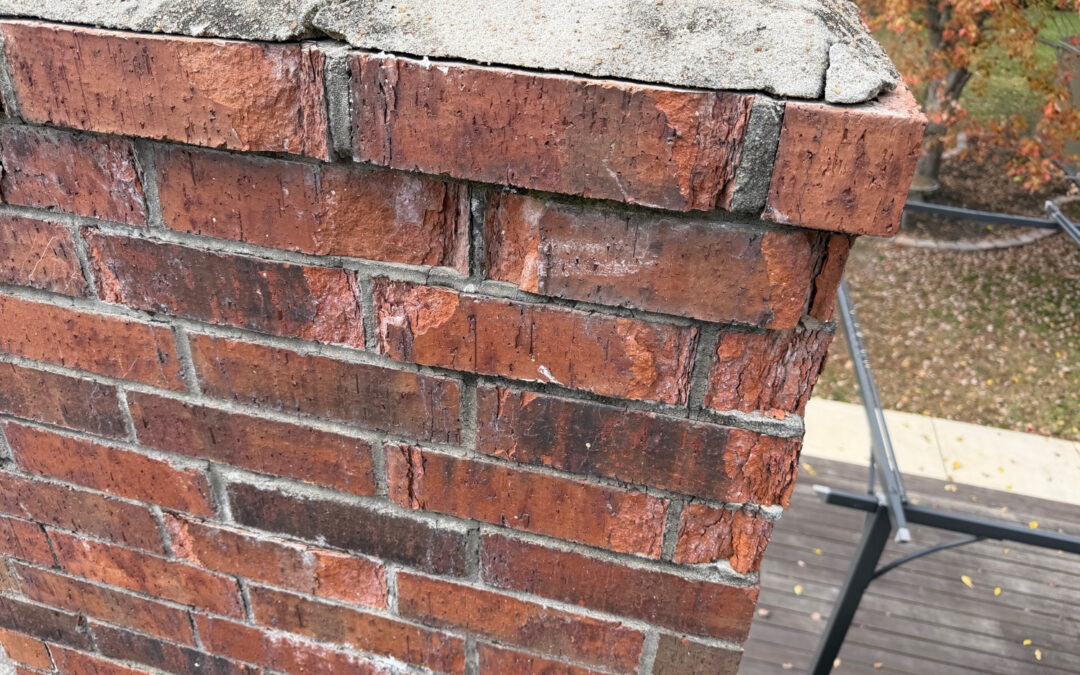
Flaking, crumbling or cracked bricks at the top of a chimney are usually a sign that water has been soaking into the brick and freezing over many winters. It’s a maintenance item, not an emergency, but it gets worse each winter if left alone. If your inspection finds it, have a chimney contractor look at it and give you a written estimate before your inspection period ends. Here’s what we found in Grandview and what it means for you as a buyer.
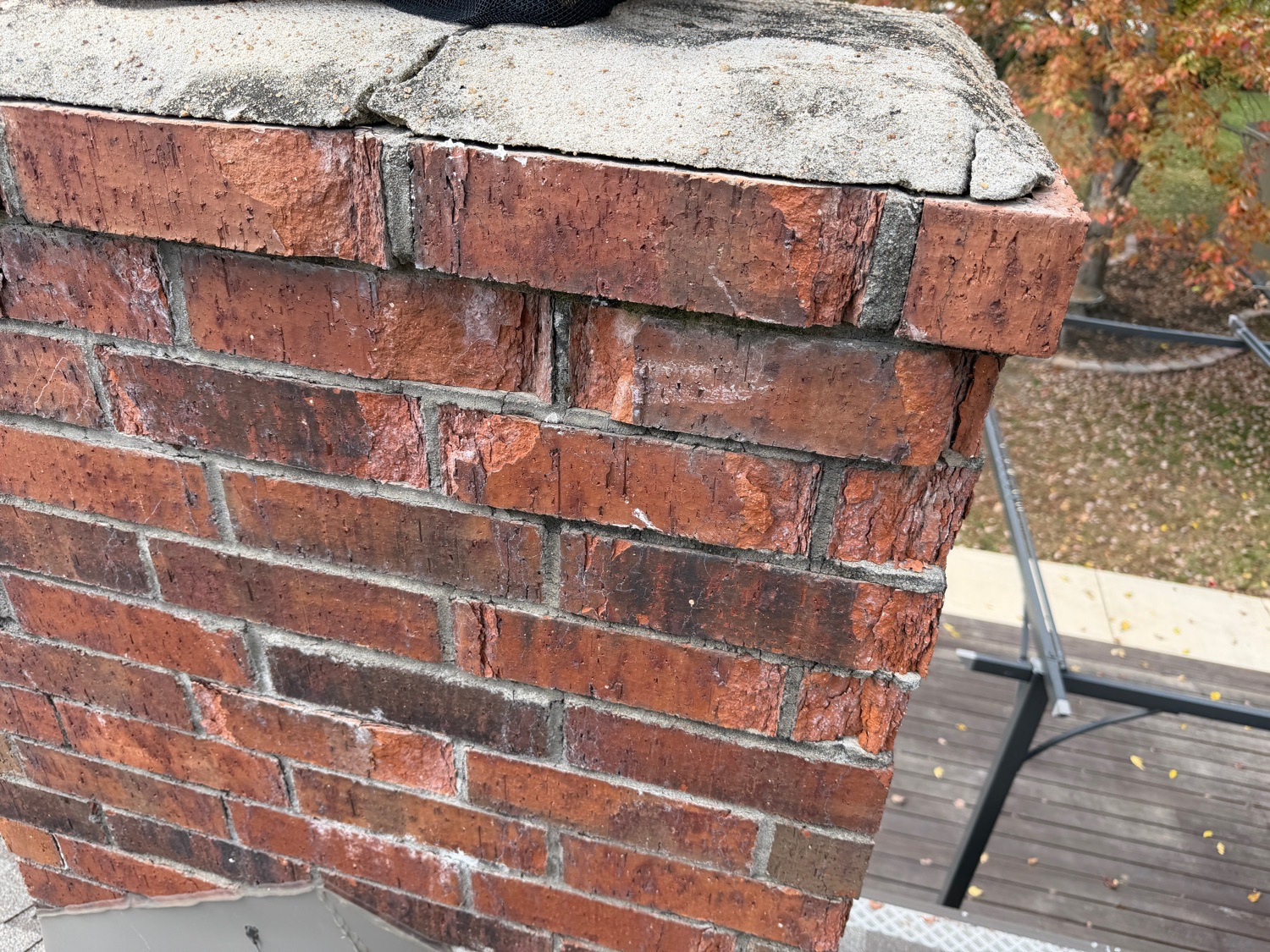
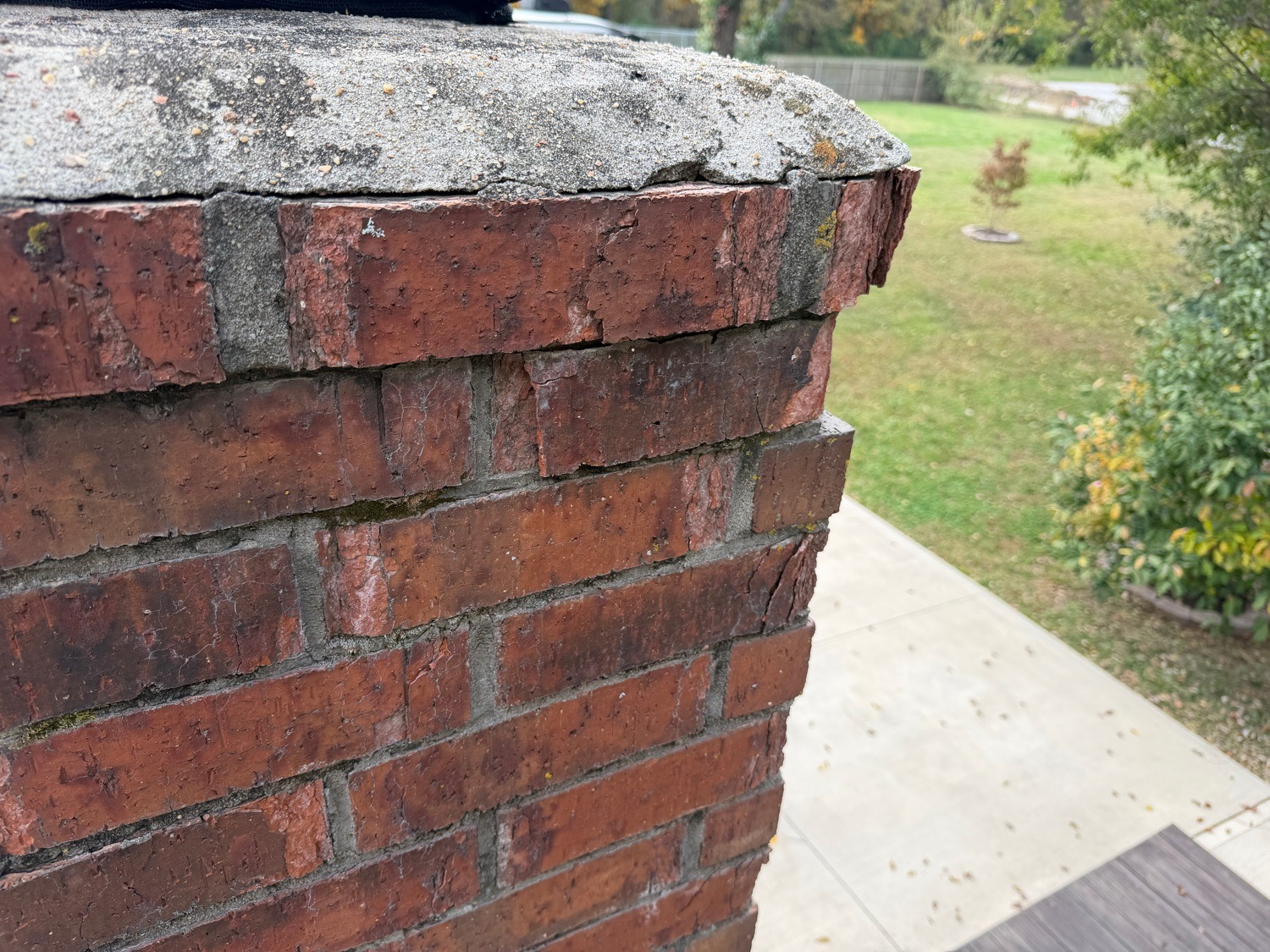
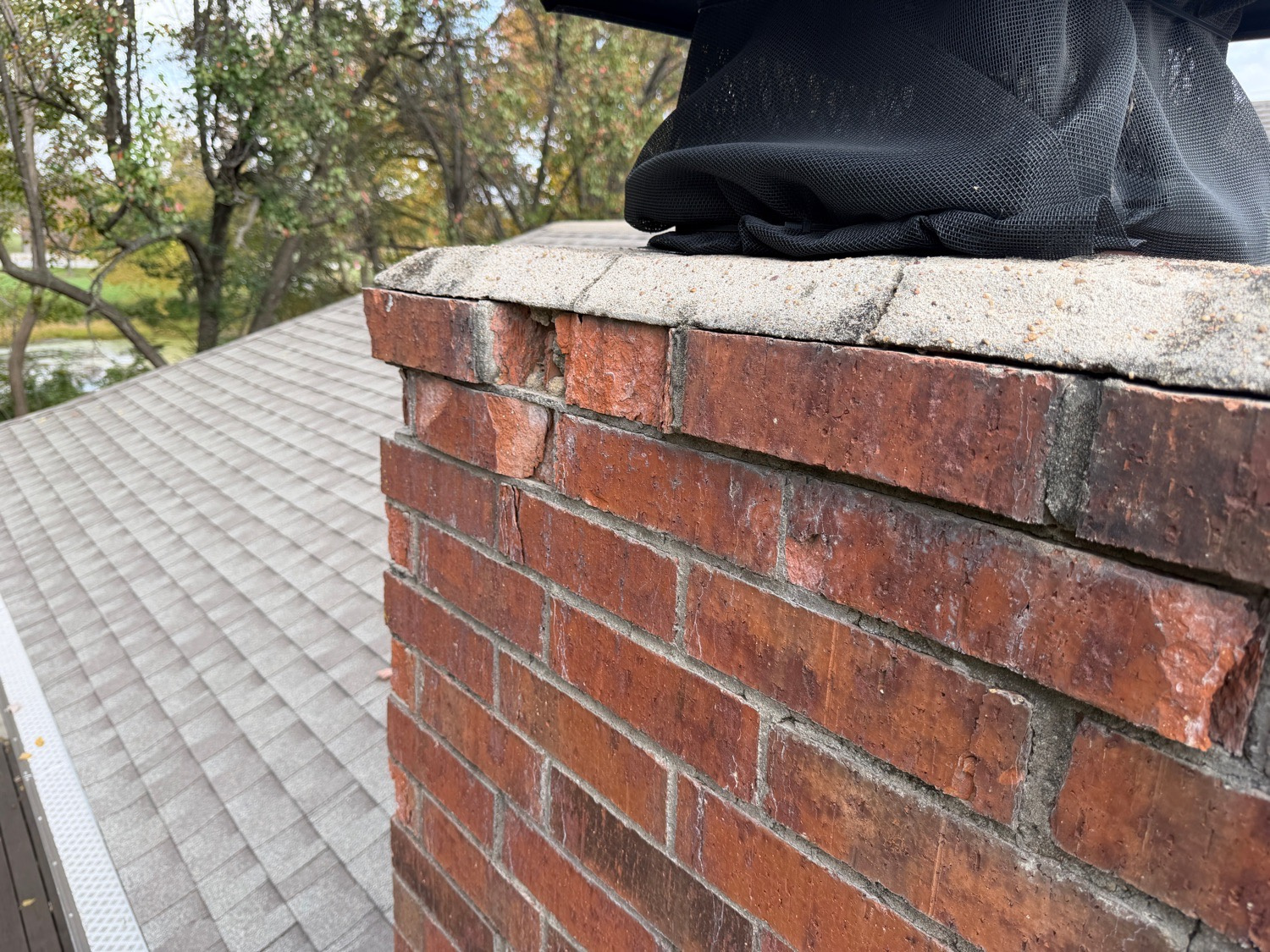
Our inspector recently looked at a 1960s ranch in Grandview with a basement and a brick chimney. Near the top of the chimney, just below the concrete cap, the faces of several bricks were flaking off, and some corner bricks and mortar joints were cracked and coming apart. The report also noted a cracked crown, the concrete cap on top, which can let water into the brick. Our report recommended an evaluation and repair by a qualified chimney contractor.
Key takeaways
- Flaking brick faces are often called spalling. The usual cause is water getting into the brick and then freezing and thawing.
- Chimneys are exposed on every side and at the top, so they get wetter than the walls of the house.
- Find where the water gets in, such as the crown, cap, flashing or open mortar joints, and fix that along with the brick.
- Get a chimney contractor’s opinion and estimate during your inspection period.
What this means, in plain English
Brick and mortar are porous. They soak up rain and snowmelt and dry out again. The trouble starts when the brick is still wet as temperatures drop. Water expands when it freezes, and in a brick that’s already full of water, that pushes on the brick from the inside. One freeze does little. Repeated freezing and thawing over many winters breaks off the face of the brick, which is what you see in these photos.
Once the face breaks off, the damage usually keeps going each winter until the water source is fixed. Mortar joints break down the same way. Water that gets into the chimney can also reach the inside of the chimney and the flue.
Why it matters in the Kansas City area
Kansas City winters bring repeated freezes and thaws. The National Weather Service lists an average first fall freeze in late October and a last spring freeze in early April for Kansas City, about five months apart. November is also when people start using their fireplaces, which makes it a good time to check.
Next steps if your inspection finds deteriorating chimney brick
- Call a chimney contractor during your inspection period. Ask what is causing the water to get in and whether the repair is replacing some bricks, repointing mortar, or rebuilding the top of the chimney.
- Ask about the crown and cap. A cracked crown or missing cap is a common water source. See our article on cracked chimney crowns.
- Ask the seller about past repairs and how recently the chimney was cleaned or inspected.
- Consider a Level 2 chimney inspection. It uses a camera to look inside the flue, which a home inspection can’t fully evaluate.
- Use the estimate in your negotiation. Your agent can help you ask for a repair or a credit.
If you already own the home
Have the chimney looked at before you use the fireplace heavily this winter. Fixing the water source early, and replacing damaged bricks before the damage spreads, is usually simpler than rebuilding later. Don’t climb on the roof to look yourself.
What our home inspection covers
Our home inspection includes the chimney walls, crown, flashing, damper, firebox and hearth where we can safely see them. For the inside of the flue, add a Level 2 chimney inspection. Your report, with photos, typically arrives the same day. See what’s included in a home inspection.
Frequently asked questions
What is chimney brick spalling?
It’s when the face of a brick flakes, peels or pops off. It is usually caused by water in the brick freezing and thawing.
Can spalled brick be repaired, or does the chimney need rebuilding?
It depends on how far the damage goes. A few bad bricks can often be replaced. Widespread damage near the top may mean rebuilding that section. A chimney contractor can tell you which.
Can I just seal the bricks?
Ask a chimney contractor first. Some coatings, especially paints and waterproof coatings that don’t breathe, can trap moisture in the brick and make freeze damage worse. Fixing the water source matters more.
Buying a home in Grandview?
We inspect homes across Grandview and the rest of the Kansas City metro. Schedule your inspection online or call 816-343-9562.
Related reading
- Home inspection in Grandview, MO
- Cracked chimney crowns in Kansas City
- What’s included in a home inspection
- Schedule now
Sources
- Brick Development Association, Design Note 7: Brickwork durability
- Brick Industry Association, Brick Brief: Flashing Chimneys
- National Park Service, Preservation Brief 1: Cleaning and Water-Repellent Treatments for Historic Masonry Buildings
- Chimney Safety Institute of America, Level 2 Inspection of a Masonry Chimney
- National Weather Service Kansas City/Pleasant Hill, Average Last Spring/First Fall Freeze Dates
This article is based on a real Inspect KC inspection. Details that could identify the home or our clients have been left out.
Recent Comments