
Termite Inspections in Kansas City
A wood-destroying insect (WDI) inspection for the home you’re buying, done on the same visit as your home inspection. $80 with a home inspection, $119 on its own.
Schedule a Termite Inspection · Call 816-343-9562
Termites are common on both sides of the state line, the damage hides inside wood, and homeowners insurance generally won’t pay for it. A termite inspection is a low-cost way to find out before you close. It’s included in our Bundle & Save package, which starts at $716 with the home inspection, radon test, sewer camera inspection and floor plan.
Why most of our clients add a termite inspection
- About 3 in 4 of our home-inspection clients this past year added a termite inspection, on its own or as part of Bundle & Save.
- We’ve done more than 2,500 inspections that included a termite inspection since 2019, across Missouri and Kansas.
- VA loans: the VA requires wood-destroying insect information for the entire states of Missouri and Kansas before it issues a Notice of Value (VA Home Loans, Local Requirements). Other lenders may ask for it too.
- Insurance: the Insurance Information Institute says homeowners policies won’t cover damage from lack of maintenance, mold or infestation by termites or other pests (Triple-I).
Termites in Missouri and Kansas
Our termites live underground. All four termite species native to Missouri are subterranean termites (genus Reticulitermes), and the eastern subterranean termite is the most common house-infesting termite in the U.S. (MU Extension, Subterranean Termites). K-State Research and Extension calls the eastern subterranean termite the most common and troublesome termite in Kansas (K-State MF722, Termites).
Subterranean termites need moisture, so they keep contact with the soil and travel through mud tubes they build across foundations. They get in where wood touches soil, through cracks in slabs and foundation walls, and around plumbing and wiring that pass through concrete. Hollow-block, brick and rock foundations give them hidden paths. Inside, they eat the soft grain of the wood and leave the outside shell, so infested wood can look normal from the outside (MU Extension).
When termites swarm
In Kansas, termites usually swarm about 10 days after the first warm spring rains, which generally come in April, though K-State has seen swarms from late February to early June (K-State Extension Entomology). A swarm of winged termites indoors is a strong sign the house is infested. If you see winged insects, look at the wings and waist: termites have four equal-length wings, straight antennae and a thick waist, and ants have a pinched waist, elbowed antennae and unequal wings (K-State MF722).
What our termite inspection covers
We look at the accessible areas of the home, inside and out, for:
- Live termites and other wood-destroying insects
- Mud tubes on foundation walls, piers, sill plates and pipes
- Damaged wood, probing at sill plates, rim joists, floor joist ends, the bottoms of wall studs and trim near the foundation
- Swarmer wings near windows, doors and light sources
- Evidence of past treatment, such as drill holes in garage floors, slabs and patios
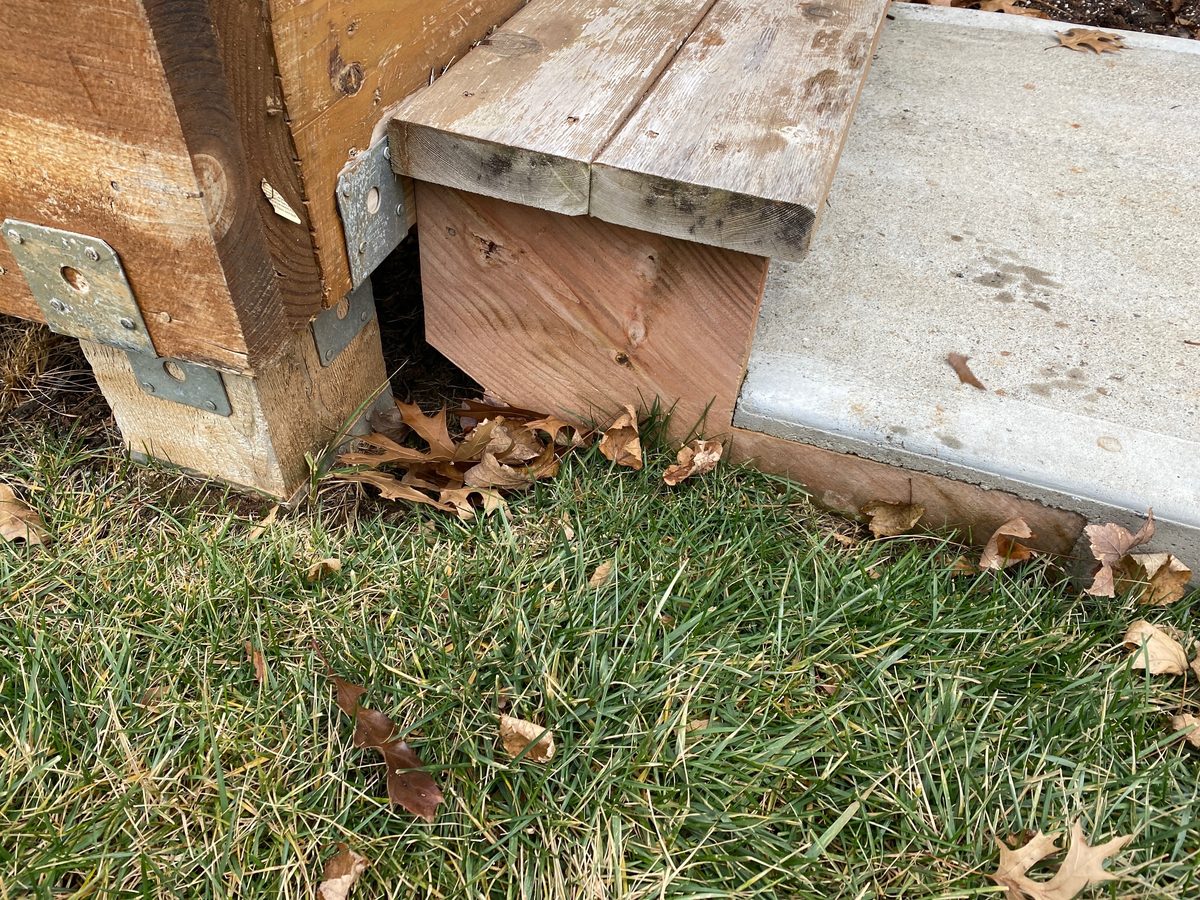
- Conditions that invite termites, such as wood touching soil, siding or trim buried in mulch, wood debris against the house, and wet soil at the foundation
What it looks like in Kansas City homes. These are from our own inspections:
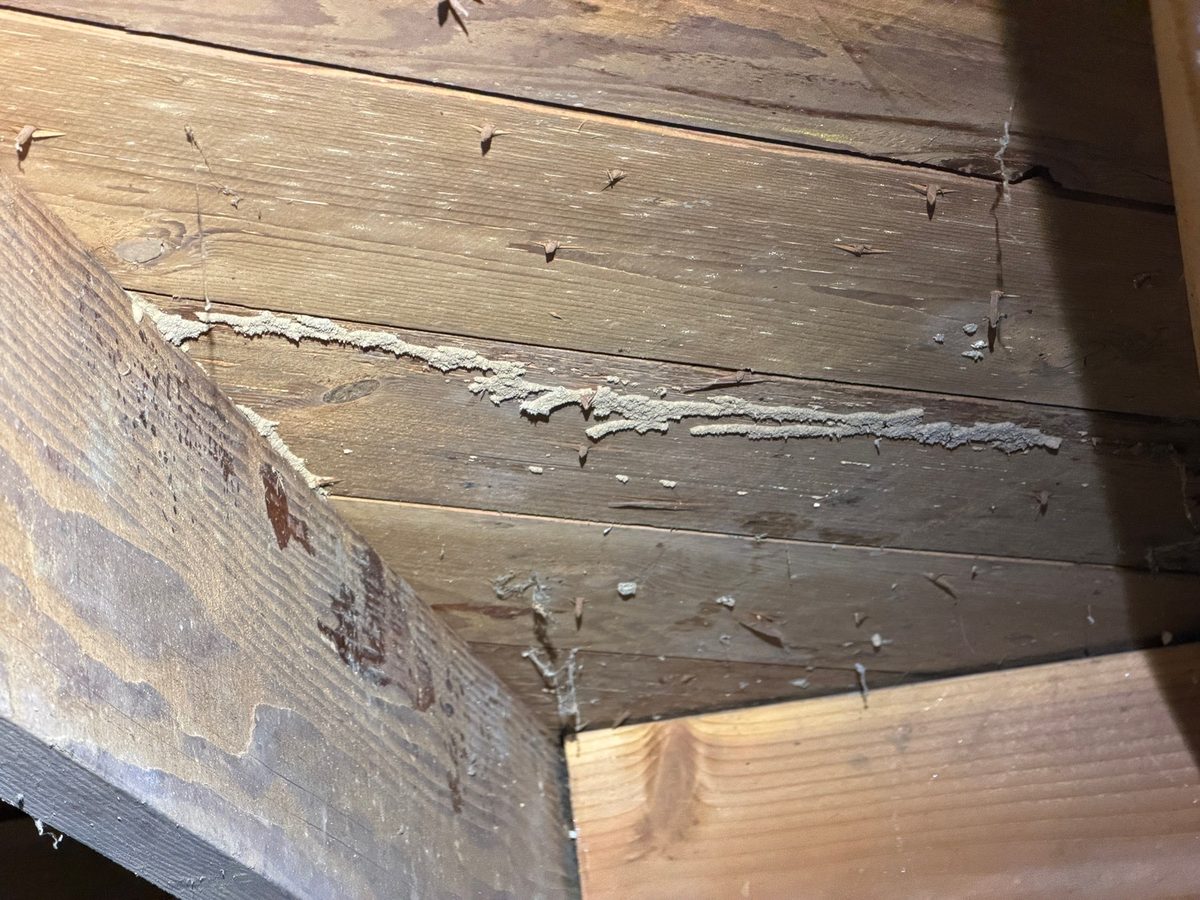
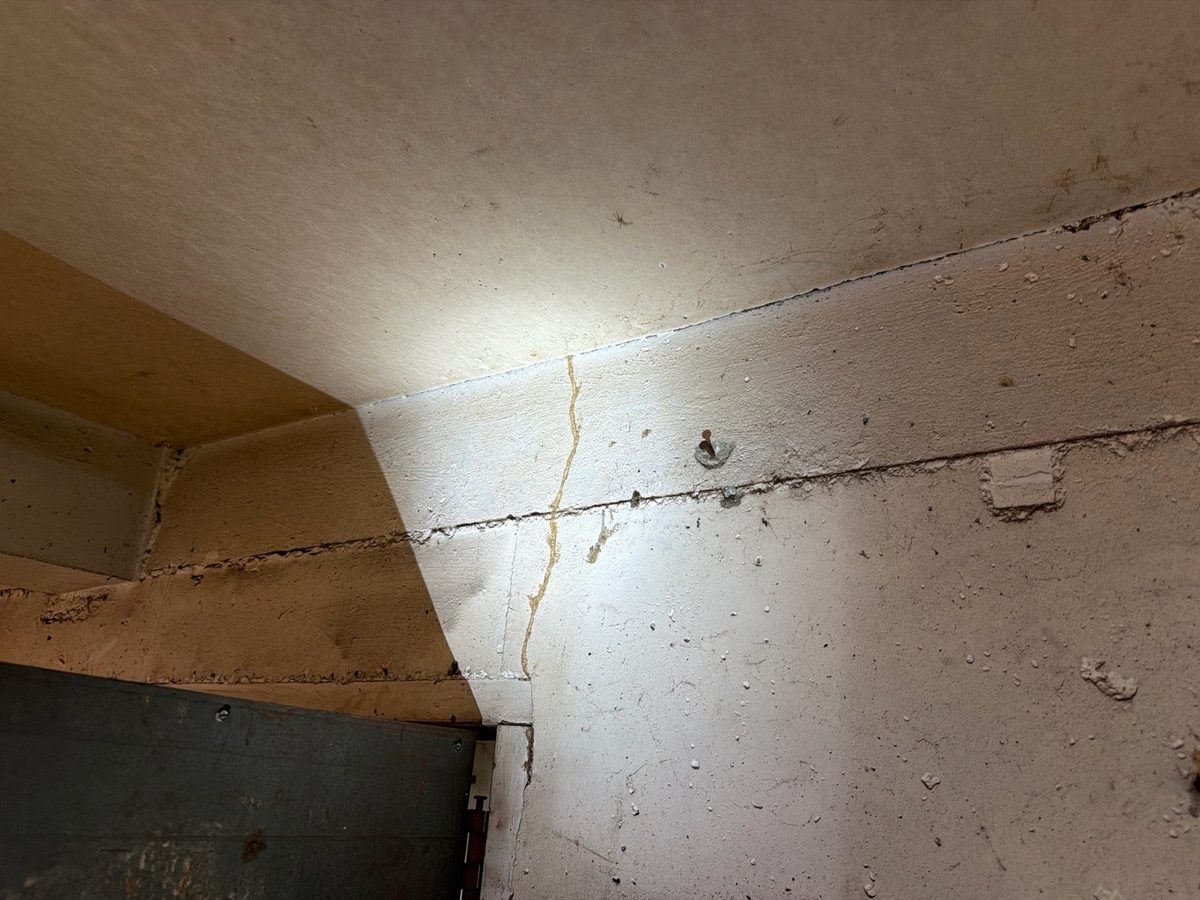
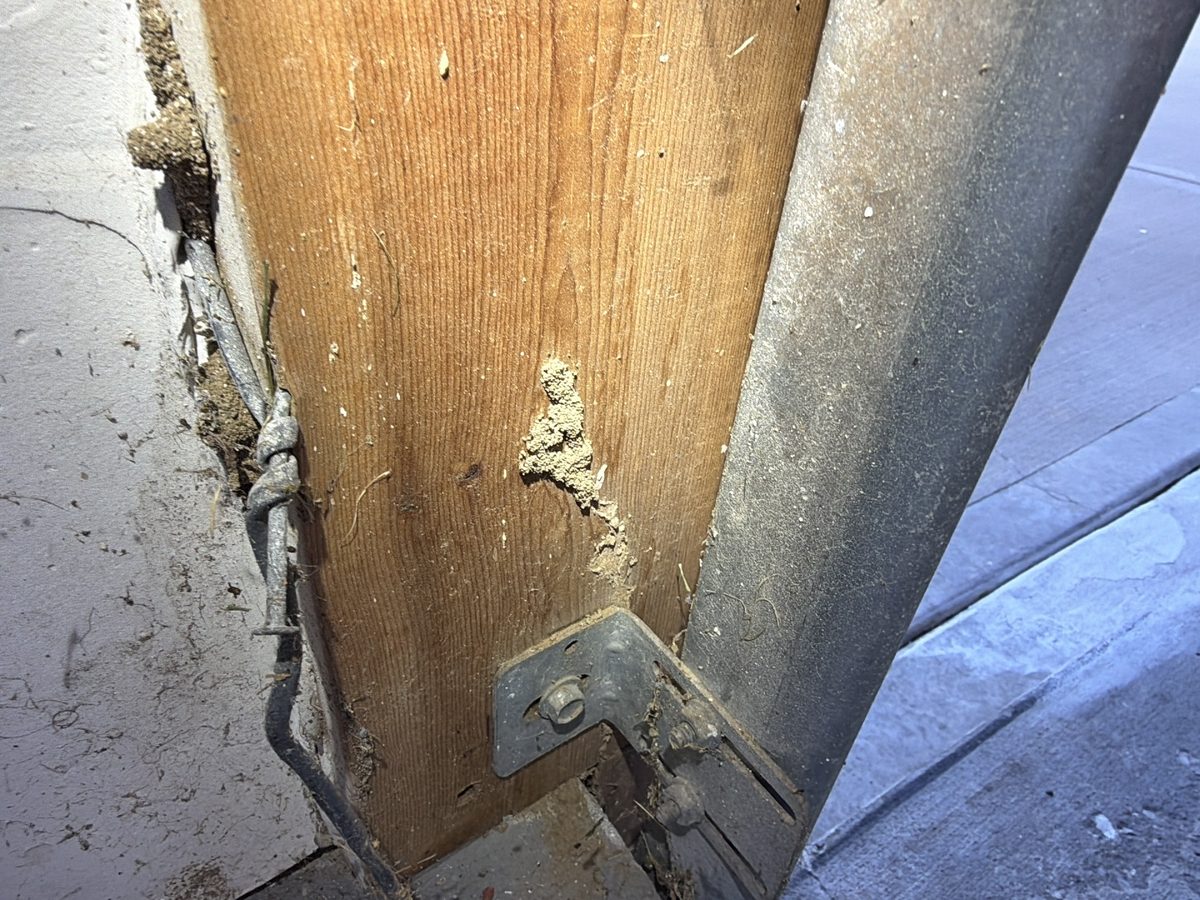
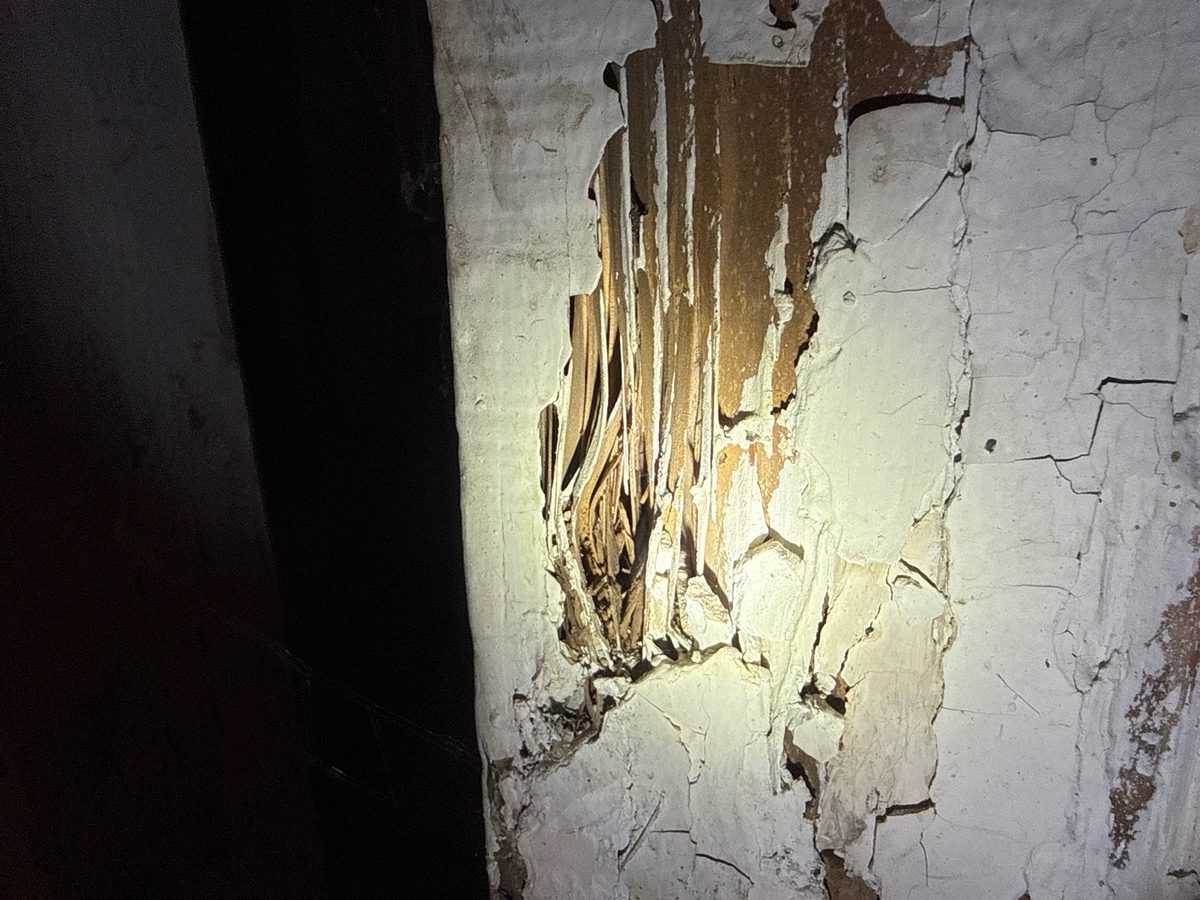
A WDI inspection is visual. We can’t see inside finished walls, under carpet or behind stored belongings, and an infested board can look sound from the outside. The report tells you exactly which areas we couldn’t access.
The conditions we find most around Kansas City homes
Moisture at the foundation is what termites need, and it’s one of the most common things on our home inspection reports. In the 12 Kansas City-area cities we track most closely, grading that slopes toward the house shows up in about 8 in 10 homes we inspect in Grandview and about 3 in 4 in Shawnee, Blue Springs and Independence. Downspouts emptying right at the foundation show up in more than 8 in 10 homes in Lee’s Summit. Wood rot at siding and trim, a sign that wood is staying wet, shows up in most homes we inspect in Leawood. MU Extension recommends grading that slopes away from the foundation, downspouts directed away from the walls, and keeping 4 to 6 inches between the soil and the bottom of siding or brick veneer. When a home inspection and a termite inspection are done together, we connect those dots for you.
If termites or damage are found
- Don’t panic. Termites work slowly. MU Extension says a few weeks of delay are of little consequence, and K-State notes a mature colony eats only about a fifth of an ounce of wood a day. Use the time to choose the right company.
- Get a treatment proposal from a licensed pest management professional. MU Extension says post-construction treatment should be done by a licensed professional, and the main options are soil treatments and bait systems. The Missouri Department of Agriculture licenses pest control companies in Missouri. Get more than one estimate.
- Ask about past treatment and any warranty. If the seller has a termite contract, ask whether it transfers.
- Price the repairs too. If the inspection found damaged wood, have a contractor look at it before your inspection deadline, and share the reports with your agent.
What termite treatment and repairs cost
National cost data from Angi (updated September 2026):
| Item | Typical cost |
|---|---|
| Professional termite treatment, national average | $621 (most pay $263 to $1,033) |
| Subterranean termite treatment | $225 to $900 |
| Termite damage repair | $600 to $3,000; severe structural repairs up to $6,000 |
Source: Angi, Termite Treatment Cost. Costs depend on the size of the home, the extent of the infestation and the treatment method, so get written estimates. We don’t sell termite treatment or repairs, so our findings have no sales angle.
Termite Inspection Prices
| Service | Price |
|---|---|
| Termite inspection with a home inspection | $80 |
| Termite inspection on its own | $119 |
| Bundle & Save (inspection, termite, radon, sewer camera, floor plan) | Starting at $716 |
| Multi-family termite inspection | $88 per building |
See all pricing or check your exact price in our online scheduler.
Serving the Kansas City area
We inspect homes for termites across the Kansas City metro, including Kansas City, MO, Overland Park, Olathe, Lenexa, Shawnee, Leawood, Lee’s Summit, Independence, Blue Springs, Grandview, Raymore and Belton. A termite inspection can be added to any home inspection, investor inspection or multi-family inspection. Pair it with a sewer camera inspection, radon test or mold inspection. See all the areas we serve.
Sources
- University of Missouri Extension, Subterranean Termites (G7420)
- K-State Research and Extension, Termites (MF722), and K-State Extension Entomology, Termites (2022)
- U.S. Department of Veterans Affairs, Local Requirements: Wood-Destroying Insect Information
- Insurance Information Institute, Which disasters are covered by homeowners insurance?
- Angi, Termite Treatment Cost (updated September 2026)
Termite add-on rates and inspection counts are from Inspect KC’s own inspection records. City findings are from our home inspection reports in each city’s limits.
Termite Inspection FAQ
How much is a termite inspection in Kansas City?
$80 when you add it to a home inspection and $119 on its own. It’s also included in Bundle & Save, which starts at $716. For multi-family buildings, it’s $88 per building.
Do I need a termite inspection for a VA loan in Missouri or Kansas?
The VA requires wood-destroying insect information for the entire states of Missouri and Kansas, so plan on it for a VA purchase. Ask your lender what it needs.
What is a WDI inspection?
WDI stands for wood-destroying insects. In the Kansas City area that mostly means subterranean termites, along with insects such as carpenter ants and wood-boring beetles. The inspection looks for live insects, damage and evidence of past treatment in the accessible areas of the home.
Does homeowners insurance cover termite damage?
Generally no. The Insurance Information Institute says standard homeowners policies won’t cover damage from infestation by termites or other pests. That’s why it pays to know before you buy.
When do termites swarm in Kansas City?
Usually in spring, about 10 days after the first warm spring rains, often in April. K-State has seen swarms from late February to early June, and occasionally in late fall. Swarms are only one sign. Mud tubes, damaged wood and conditions that invite termites can be found in any season.
What happens if the inspection finds termites?
Get a treatment proposal from a licensed pest management professional, ask the seller about past treatment and any transferable warranty, and have damaged wood looked at before your inspection deadline. Termites work slowly, so you have time to choose the right company.
Do you treat termites?
No. We don’t sell termite treatment or repairs. That keeps our findings unbiased.
Add a Termite Inspection to Your Home Inspection
Book online in minutes or call our office. We’ll help you buy with confidence.