
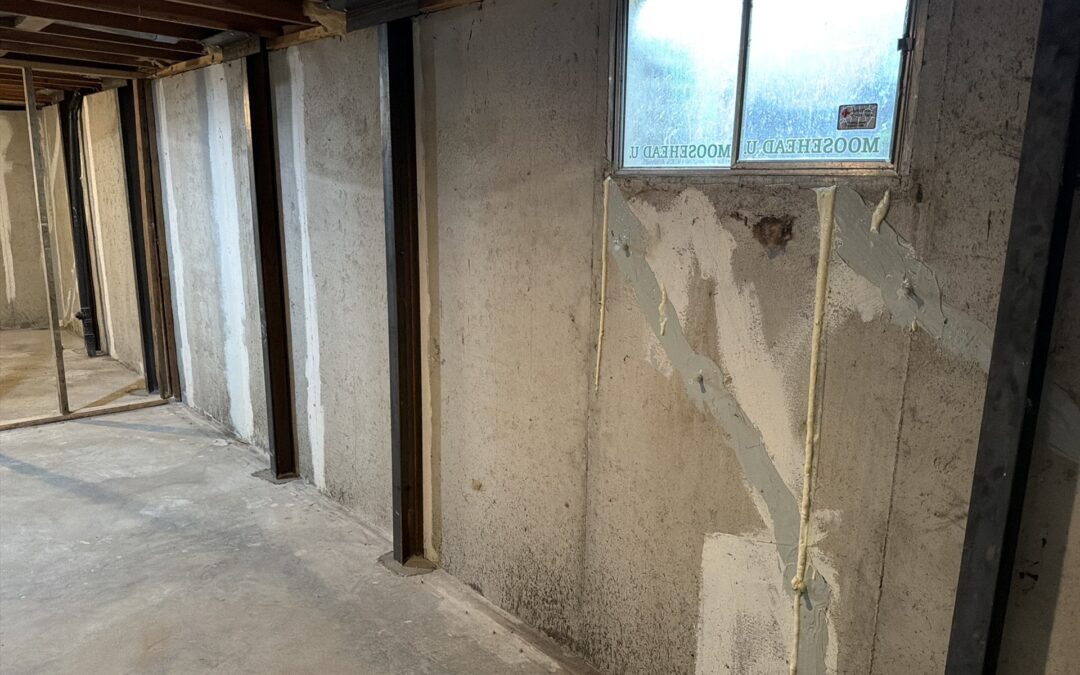
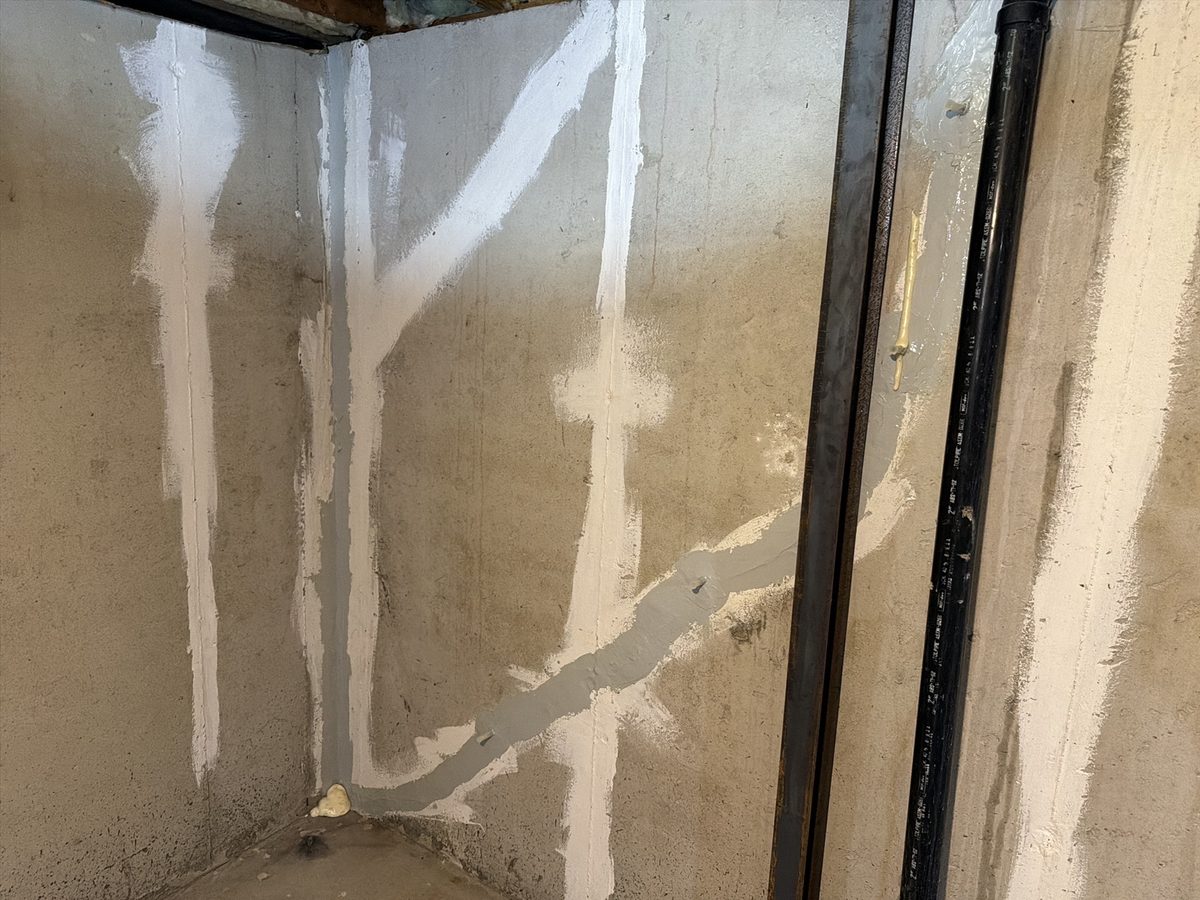
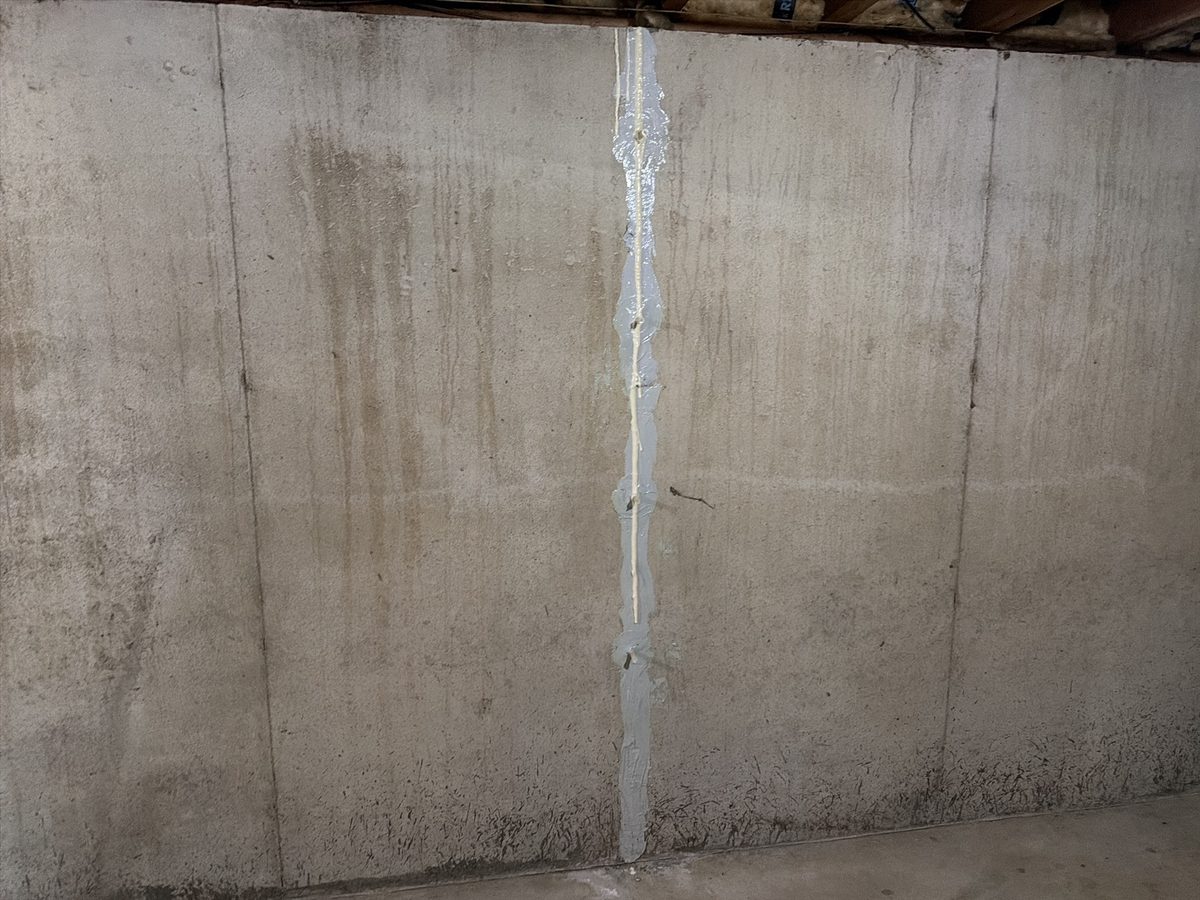
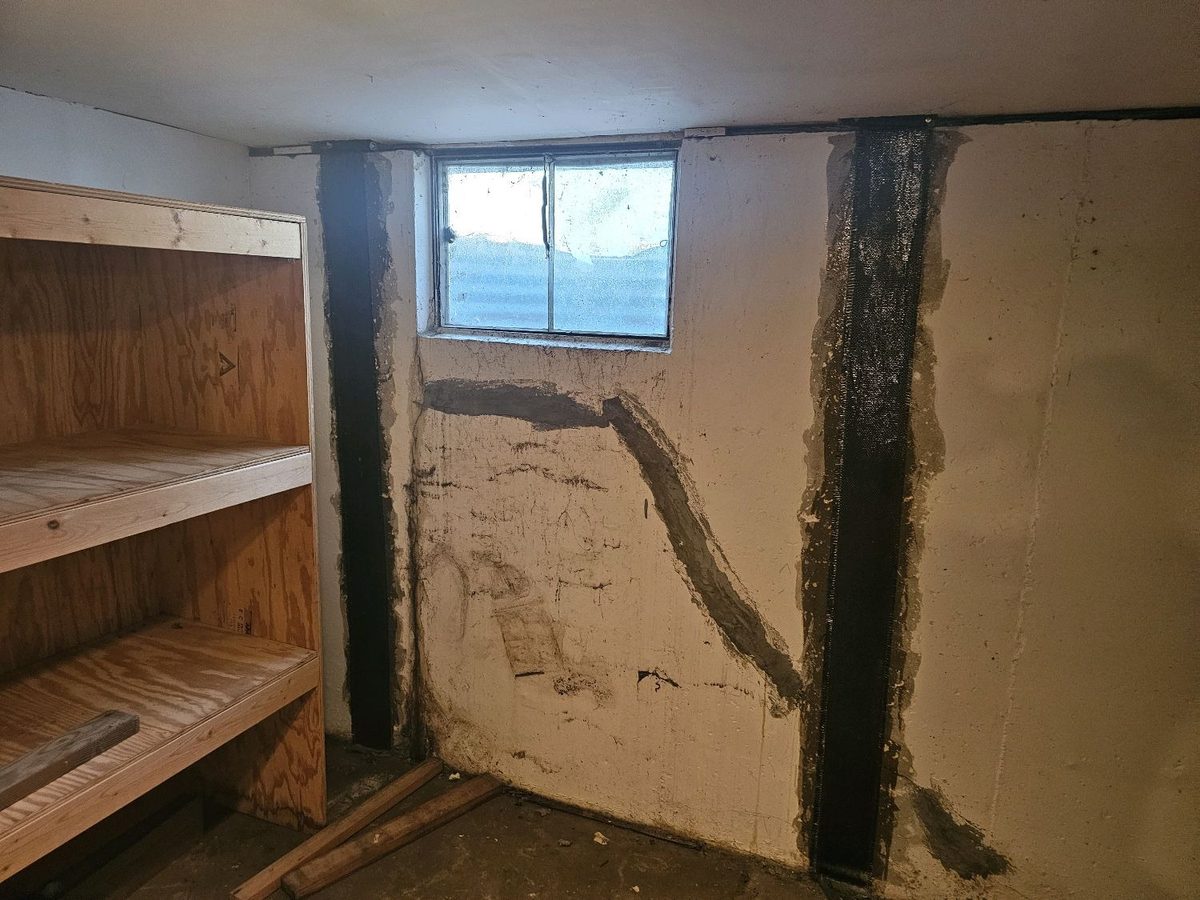
Our inspector recently walked down to the basement of a late-1970s two-story in Overland Park. It’s a typical Overland Park house of that era: a hip roof and a full basement with poured concrete walls. Along one basement wall were steel wall braces, and several vertical cracks had been injected and sealed. Someone had already repaired this foundation.
Our report explained what that means: “While the repair(s) appeared stable at the time of inspection,” a prior structural repair can hide underlying problems or an incomplete fix, and future movement can’t be predicted from a visual inspection alone. We recommended asking the seller who did the work and for any warranties or documents, monitoring the repaired areas for new movement, and getting a second opinion from a structural engineer. Because foundation movement can also damage the underground sewer line, we recommended a sewer camera inspection as well (this buyer had one done the same day).
Key takeaways
- Wall braces and sealed cracks mean the foundation moved at some point and someone stabilized it. That’s common in Overland Park, and it isn’t automatically a deal-breaker.
- The paperwork matters: who did the repair, what caused the movement, and whether a warranty transfers to you.
- Sealing cracks typically costs a few hundred dollars. Foundation reinforcement and piering run into the thousands, based on national cost guides.
- If you’re buying, get a structural engineer’s opinion and any repair estimates before your inspection period ends, and add a sewer camera inspection.
What we saw, in plain English
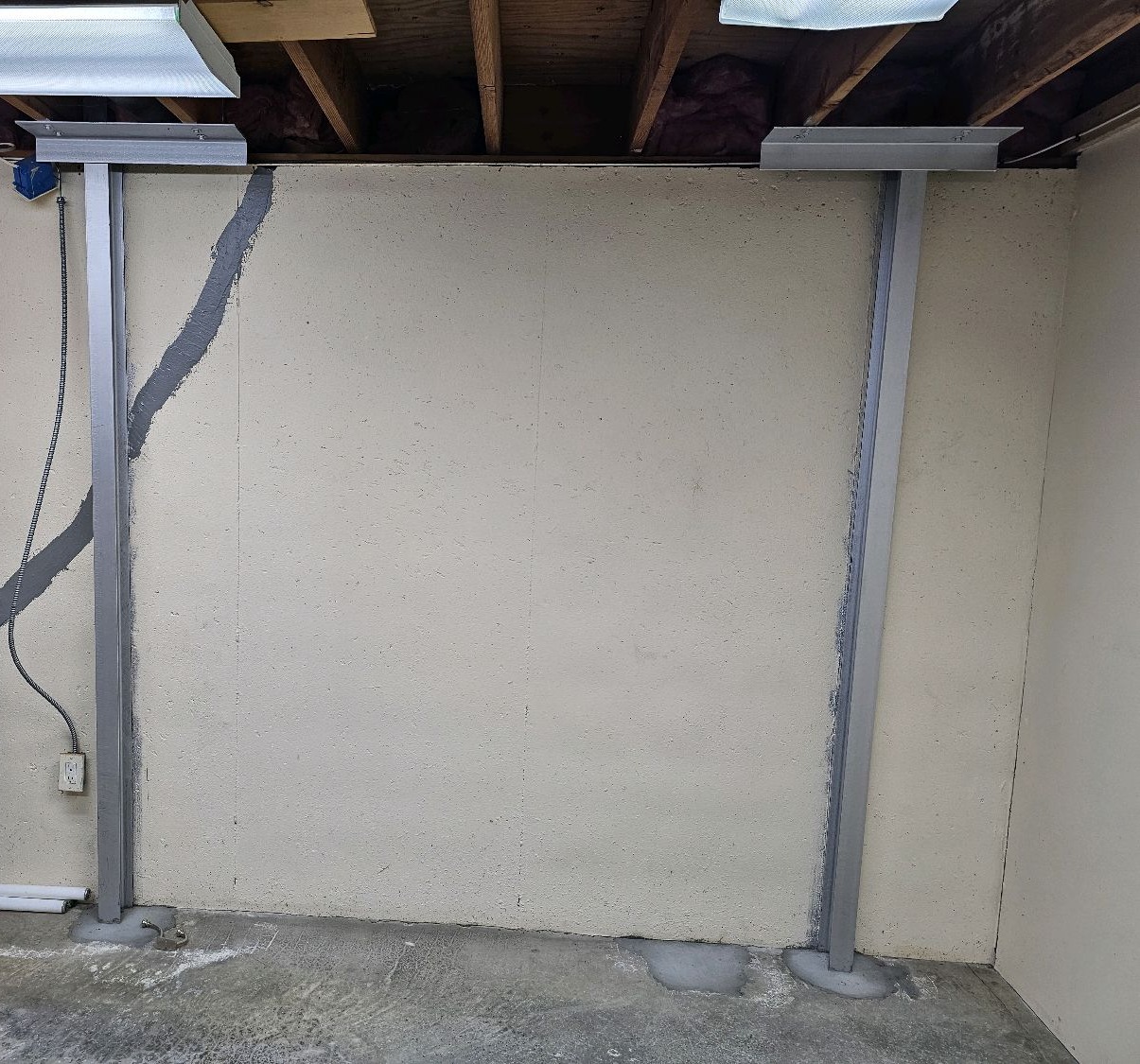
Steel wall braces are steel beams set against a basement wall, anchored at the floor and tied to the floor framing above. They’re used when a wall has cracked or started to push inward. Clay soil that swells when it’s wet pushes on basement walls from the outside, and braces hold the wall in place.
Injected and sealed cracks are cracks that a contractor filled from the inside, usually with epoxy or polyurethane, to stop water and seal the wall. HomeAdvisor says “cracks wider than 1/8-inch are cause for concern” and suggests consulting a structural engineer at that point, while cracks that don’t affect the structure are an easy fix but shouldn’t be ignored, because they let moisture in (HomeAdvisor).
Neither one tells you whether the movement has stopped. That’s why we look for new cracking around the repair, check doors and drywall upstairs, and recommend getting the repair history.
Other repairs we’ve seen in Overland Park
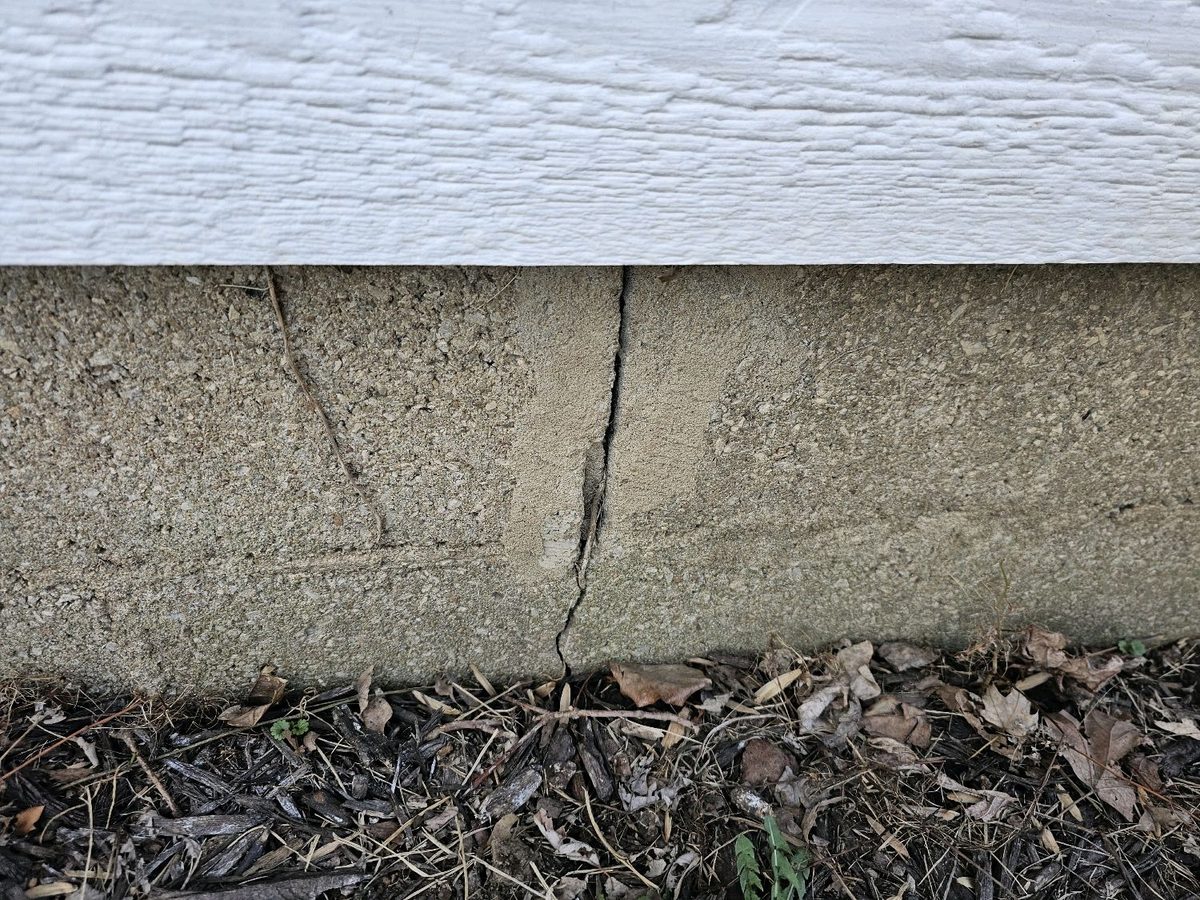
Braces aren’t the only fix. In other Overland Park homes we’ve inspected, we’ve found reinforcement straps across cracked walls and old patches that cracked again, which tells you the wall kept moving after the repair.
Why prior foundation repairs are common in Overland Park
The Kansas Geological Survey describes expansive clay soils as a widespread Kansas hazard: they swell when wet and shrink when dry, cracking foundations, driveways and sidewalks (Kansas Geological Survey). That seasonal push and pull is why a basement crack can look different in August than it did in April.
Our own numbers show it. In our most recent 80 Overland Park inspections:
- 27 of 80 homes (34%) had prior foundation repairs or structural work, compared with 25% across Johnson County and 22% across all 1,335 Kansas City-area homes in our sample. 6 of those 27 were rated a Major Concern.
- 57 of 80 (71%) had soil that was flat or sloped toward the house, and 31 of those were rated a Major Concern. Water against the foundation is what makes clay swell.
- 51 of 80 (64%) had doors that rub, stick or don’t latch, and 46 of 80 (58%) had cracks in interior walls or ceilings, the kinds of signs we connect to what we see in the basement.
About three in four Overland Park homes we inspect were built between the 1950s and the 1990s (59 of 80; the median year built is 1982), and at least 64 of 80 have a basement, including 12 walk-outs. That’s a lot of basement wall for clay soil to push against. See what else we look for on our Overland Park home inspection page.
Is a repaired foundation a deal-breaker?
Not automatically. A documented, professional repair can be reassuring. HomeAdvisor notes that buyers want proof the foundation is stable, and documentation showing the structure was properly stabilized often reads as a plus, not a problem (HomeAdvisor). The questions to answer before you close:
- What caused the movement, and was the cause fixed, such as grading and downspouts that send water toward the house?
- Who did the repair, when, and was it designed or reviewed by an engineer?
- Is there a warranty, and does it transfer to you?
- Are there signs of new movement: fresh cracks near the repair, gaps at the braces, doors that stick or new drywall cracks upstairs?
What foundation repairs typically cost
These are national ranges from two large cost guides. Overland Park quotes depend on the size of the basement, the cause of the movement and how much work is needed, so get at least two written estimates, ideally after a structural engineer’s report.
| Repair | Typical cost | Source |
|---|---|---|
| Foundation cracks (sealing or injecting) | $250 to $800 | HomeAdvisor, Angi |
| Structural engineer report | $340 to $780 | HomeAdvisor |
| Structural report (wider range) | $300 to $1,000 | Angi |
| Foundation reinforcement | $1,000 to $5,000 | Angi |
| Bowing walls (carbon fiber or steel reinforcement) | $4,000 to $12,000 | HomeAdvisor |
| Piering or underpinning, per pier | $1,000 to $3,000 | HomeAdvisor |
| Fixing foundation leaks / waterproofing | $2,000 to $7,000 | HomeAdvisor |
| Drainage system installation | $2,800 to $6,500 | Angi |
Angi and HomeAdvisor both put the national average for foundation repair at about $5,174, with most homeowners spending $2,225 to $8,133 (Angi, HomeAdvisor). Angi lists steel support beams at $6 to $20 per foot for materials, and HomeAdvisor recommends a structural engineer’s report because the engineer has no stake in selling you a repair.
Next steps if you’re buying a home with foundation repairs
- Ask the seller for the paperwork. Get the repair invoice, any engineer’s report, and the warranty. Call the repair company to confirm whether the warranty transfers and what it takes.
- Get a structural engineer’s opinion. Especially if the cracks are wide, displaced or leaking, the braces show gaps, or the repair has no paperwork.
- Look at the water. Grading and downspouts that send water toward the house keep clay soil swelling. Our guide to gutters and grading covers the easy fixes.
- Add a sewer camera inspection. Foundation movement can crack or sag the underground sewer line. A sewer camera inspection is $200 with your home inspection.
- Get estimates before your deadline. A written estimate makes a repair request or a credit much easier to negotiate.
If you already own the home
Keep the repair paperwork with your closing documents. You’ll need it when you sell. Angi’s advice: “Mark any cracks you find and watch for changes over a few months” (Angi). We also suggest writing the date next to each mark so you can tell whether a crack is growing. New cracks, cracks that widen, or a brace that has moved are reasons to call the repair company or a structural engineer.
What our home inspection covers
Every Inspect KC home inspection looks at the visible foundation walls and floor, the grading and drainage around the house, and the signs of movement inside, along with the rest of the home. See the full list of what gets inspected and our pricing. For the bigger picture, see our 2026 findings from 1,335 home inspections.
Foundation repairs FAQ
Is it safe to buy a house with foundation repairs?
Often, yes. Many repairs are done well and hold up for decades. What matters is what caused the movement, whether the repair addressed it, and whether there are signs of new movement. Get the repair paperwork, and if anything looks off, have a structural engineer evaluate it before your inspection period ends.
What are basement wall braces?
Wall braces are steel beams installed against a basement wall and anchored at the floor and at the floor framing above. They hold a wall that has cracked or started to lean inward from soil pressure. Seeing them tells you the wall moved at some point and someone stabilized it.
Does a foundation repair warranty transfer to a new owner?
Some do and some don’t, and some require a transfer fee or notice within a set time after closing. Ask the seller for the warranty document and call the repair company to confirm the terms before you close.
Should I hire a structural engineer?
If a home has prior repairs, displaced or widening cracks, or walls that lean, it’s worth it. A structural engineer’s report typically costs $340 to $780, according to HomeAdvisor, and the engineer isn’t selling the repair.
Can foundation movement damage the sewer line?
Yes. When a foundation settles or moves, the underground sewer line can sag or break. We recommend a sewer camera inspection on any home with foundation movement or prior repairs. It’s $200 with your home inspection.
Does a home inspection include the foundation?
Yes. We inspect the visible foundation walls and floor, look for cracks, movement and past repairs, and tie what we see to signs inside the house, like doors that stick and cracks in drywall. Finished walls and stored belongings can hide parts of the foundation.
Buying a home in Overland Park?
Our team, led by Certified Master Inspector® Bryan Standley with InterNACHI Certified Professional Inspectors Tylor Standley and Aiden Finlan, inspects homes across Overland Park and the rest of Johnson County. Reports usually arrive the same day.
Schedule Now · Call 816-343-9562
Also see our Overland Park home inspections, sewer camera inspections and radon testing, or all the areas we serve.
Sources
- Angi, How Much Does Foundation Repair Cost? (updated Aug 3, 2026)
- HomeAdvisor, How Much Does Foundation Repair Cost in 2026? (updated June 20, 2026)
- Kansas Geological Survey, GeoRecord Vol. 7.3, From the Director (geologic hazards, including expansive soils)
This article is based on a real Inspect KC inspection. Details that could identify the home or our clients have been left out. Overland Park figures are based on our most recent 80 Inspect KC inspections in Overland Park, data through October 21, 2026.
Recent Comments