
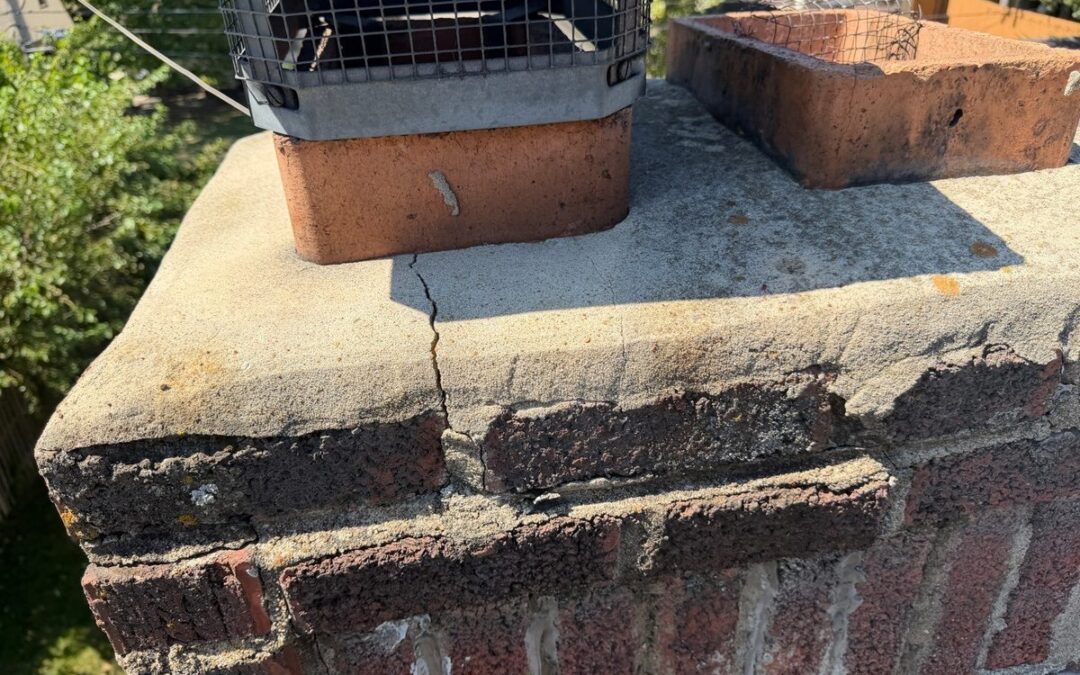
In September 2026, our inspector climbed onto the roof of a 1922 two-story in south Kansas City. It’s a classic older Kansas City house: about 1,900 square feet, a gable roof, a brick chimney, and a basement with fieldstone foundation walls. The chimney crown is what stopped us.
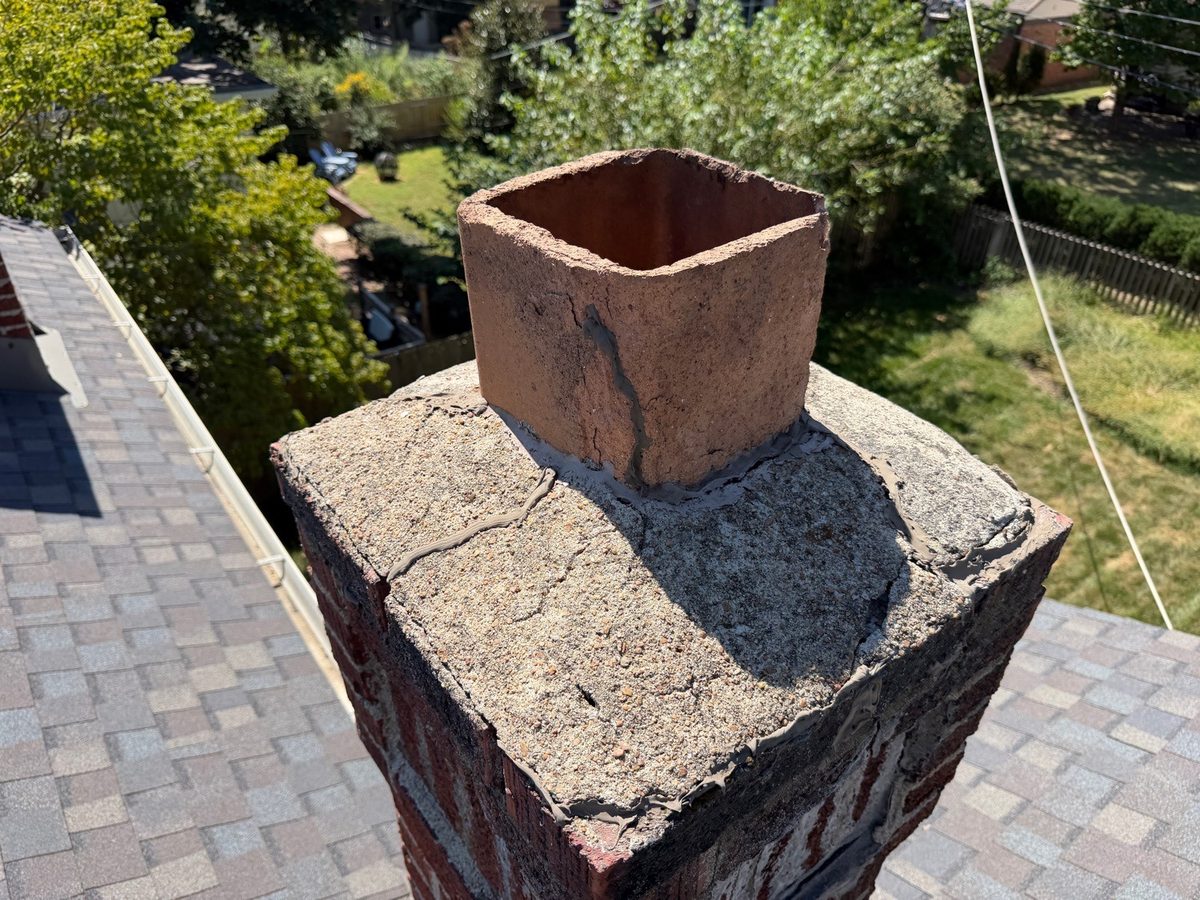
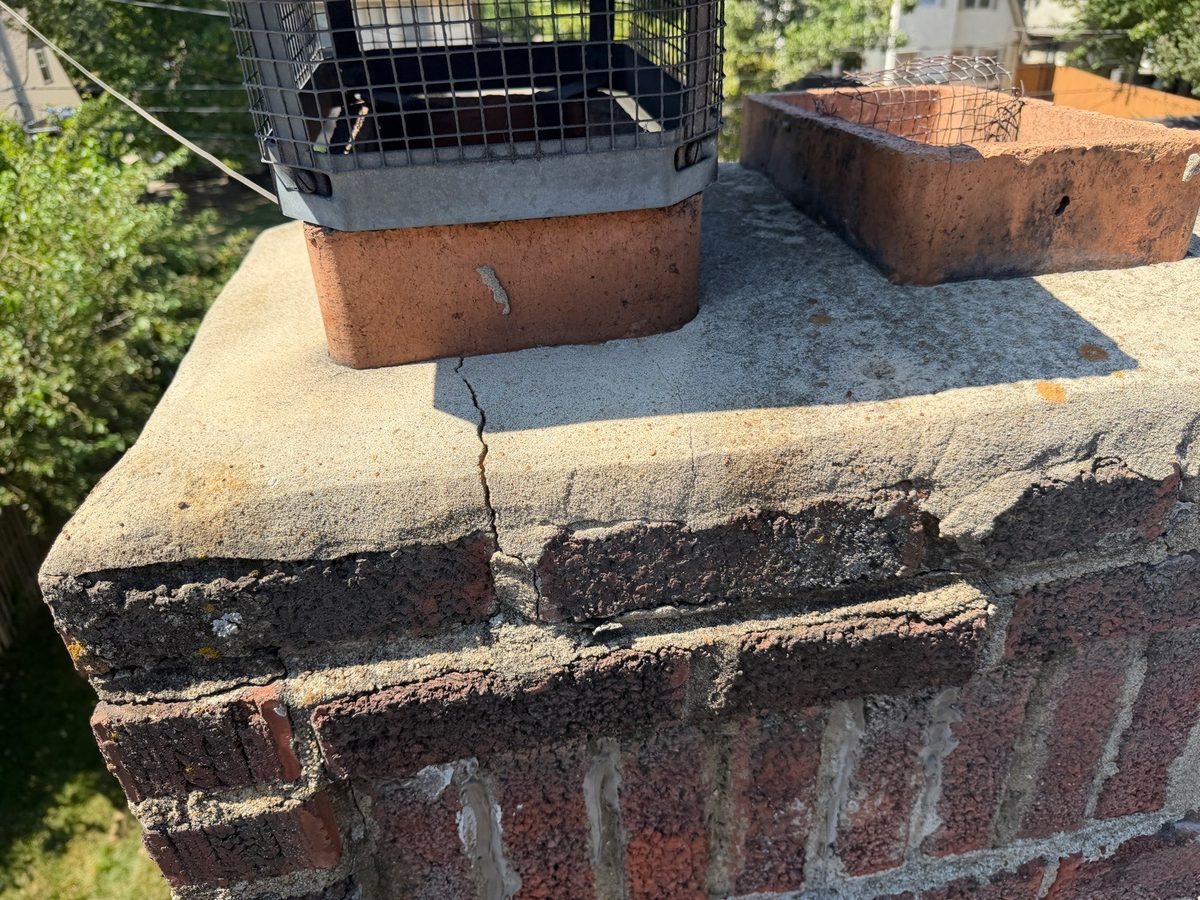
The concrete crown around the clay flue liner was cracked and wearing away, and someone had patched it before. One crack ran right through the crown and into the brick below. Our report explained why that matters: a cracked crown lets water into the chimney, where freeze-thaw cycles break down the masonry and shorten the chimney’s life. We recommended that a qualified chimney contractor evaluate the crown and repair or replace it.
Key takeaways
- A chimney crown is the concrete cap on top of the chimney. Its job is to keep water out of the brick.
- Cracks let water in, and Kansas City winters freeze and thaw it over and over. Small cracks grow.
- Repairs typically run from a few hundred dollars for sealing to about $3,000 for a new crown, based on national cost guides.
- If you’re buying, get a chimney contractor’s estimate before your inspection period ends, and consider a Level 2 chimney inspection.
What a chimney crown does
The crown is the slab on top of a masonry chimney, usually concrete, that covers the brick around the flue. Angi describes it as a three- or four-inch-thick slab of stone, concrete or metal that protects the chimney from water damage (Angi). The Chimney Safety Institute of America (CSIA) recommends that a crown project 2 inches beyond every side of the chimney so water drips off instead of running down the brick, and calls a cast crown with an expansion joint an ideal long-lasting replacement for the sand-and-mortar washes found on many older chimneys (CSIA).
Water is the real enemy. CSIA says water causes more damage to masonry chimneys than fire, and that common brick acts like a sponge, absorbing water and wicking moisture to the inside of the chimney (CSIA).
Why a cracked crown matters in Kansas City
Kansas City gets a long freeze season. The National Weather Service puts Kansas City’s average first fall freeze around October 28 and the average last spring freeze around April 8 (NWS Kansas City/Pleasant Hill). That’s more than five months when water in a crack can freeze, expand and push the crack wider, then thaw and soak in deeper.
Over a few winters, that cycle can lead to:
- Spalling brick, where the face of the brick flakes or pops off
- Mortar washing out of the joints near the top of the chimney
- A cracked or loose flue liner
- Rust on the damper and firebox parts
- Water stains on ceilings or walls near the chimney, and wet framing in the attic
Older Kansas City homes are where we see it most. About 4 in 10 of the Kansas City homes and buildings we’ve inspected were built before 1960, and nearly half of the homes we inspect inside Kansas City, Missouri city limits get at least one chimney note, such as a cracked crown, firebox wear or a sweep recommendation. See what else we look for on our Kansas City, MO home inspection page.
What chimney crown repairs typically cost
These are national ranges from two large cost guides. Kansas City quotes depend on the chimney’s height, roof pitch, crown size and how far the damage has gone, so get at least two written estimates.
| Repair | Typical cost | Source |
|---|---|---|
| Chimney crown repair (typical minor repair) | $150 to $350 | HomeAdvisor |
| Sealing a crown (after cracks are repaired) | $175 to $600 | Angi |
| Repairing a cracked crown (more cracks, more cost) | $300 to $2,200 | Angi |
| Resurfacing a crown | $800 to $1,200 | Angi |
| Replacing the crown | $1,800 to $3,000 | Angi |
| Chimney sweep / cleaning | $130 to $380 | HomeAdvisor |
Angi puts the 2026 national average for chimney crown repair at $1,550, with most homeowners spending $400 to $2,200 (Angi). HomeAdvisor notes that replacing a damaged crown can cost up to $3,000 and that acting early keeps the bill lower (HomeAdvisor). If water has already damaged the brick, mortar or flue liner, expect those repairs on top.
Next steps if you’re buying a home with a cracked crown
- Ask the seller for chimney history. When was it last swept, inspected or repaired? A patched crown, like the one in our photos, means someone has worked on it before.
- Get a Level 2 chimney inspection. The chimney inspection standard used by certified chimney sweeps (NFPA 211) calls for a Level 2 inspection on the sale or transfer of a property. It goes beyond what can be seen from the roof and firebox and can include a video look inside the flue (CSIA). We offer a Level 2 masonry chimney inspection starting at $189 for the first flue when you add it to a home inspection.
- Get a contractor’s estimate before your deadline. A written estimate makes a repair request or a credit much easier to negotiate.
- Check the ceilings and attic near the chimney. Stains, soft drywall or wet framing mean water is already getting in.
- Hold off on fires if the flue is damaged. If the Level 2 inspection or a sweep finds a cracked flue liner, don’t use the fireplace until it’s repaired.
If you already own the home
CSIA and the National Fire Protection Association recommend a chimney inspection every year (CSIA). Late October is a good time: before you light the first fire and before the first freeze. Ask the sweep to look at the crown, the flashing and the cap while they’re up there. A well-built crown can last 50 to 75 years, but a poorly built one can fail in 20 years or less (Angi).
What our home inspection covers
Every Inspect KC home inspection looks at the chimney crown, chimney walls, flashing, damper, firebox and hearth extension where we can safely see them, along with the rest of the house. See the full list of what gets inspected, our pricing (including Level 2 chimney inspections), and typical service lives in our life expectancy chart. Water around the house matters too: see our guide to gutters and grading.
Cracked chimney crown FAQ
Is a cracked chimney crown serious?
It’s usually not an emergency, but it shouldn’t wait. The crack lets water into the chimney, and freeze-thaw cycles make it grow. Fixed early, it’s often a sealing or resurfacing job. Left alone, it can lead to spalled brick, failed mortar, a damaged flue liner and leaks inside the house.
What is the difference between a chimney crown and a chimney cap?
The crown is the concrete or masonry slab that covers the top of the chimney around the flue. The cap is usually a metal cover that sits over the flue opening to keep out rain, animals and debris and to stop sparks. A chimney often needs both.
Can I seal a cracked chimney crown myself?
We don’t recommend it. Working on a roof is dangerous, and a coating can’t fix a crown that is too thin, has no overhang or is breaking apart. A chimney contractor can tell you whether sealing, resurfacing or a new crown is the right repair.
Does homeowners insurance cover chimney crown repair?
Usually not for wear and tear. HomeAdvisor notes that most policies cover chimney repairs caused by a sudden, covered event, such as lightning, a fallen tree or a house fire, but not damage from neglected maintenance or everyday wear. Check your own policy.
How long does a chimney crown last?
A well-built crown can last 50 to 75 years, according to Angi and HomeAdvisor. A poorly built one can fail in 20 years or less, especially a thin mortar wash with no overhang.
Does a home inspection include the chimney?
Yes. Our home inspection covers the chimney crown, chimney walls, flashing, damper, firebox and hearth extension where we can safely see them. For the inside of the flue, add a Level 2 masonry chimney inspection.
Buying an older home in Kansas City?
Our team, led by Certified Master Inspector® Bryan Standley, inspects homes across Kansas City and the rest of the metro, on both sides of the state line. Reports usually arrive the same day.
Schedule Now · Call 816-343-9562
Also see our sewer camera inspections and radon testing, or all the areas we serve.
Sources
- Angi, How Much Does Chimney Crown Repair Cost? (updated Oct 16, 2026)
- HomeAdvisor, How Much Do Chimney Repairs Cost? (updated June 20, 2026)
- Chimney Safety Institute of America, Four Low-Cost Recommendations to Prevent Major Water Damage
- Chimney Safety Institute of America, Industry Standard for Inspections Developed to Aid Homeowners (Levels I to III, NFPA 211)
- National Weather Service Kansas City/Pleasant Hill, Average Last Spring/First Fall Freeze Dates
This article is based on a real Inspect KC inspection. Details that could identify the home or our clients have been left out. Kansas City figures are from Inspect KC’s own inspection records.
Recent Comments